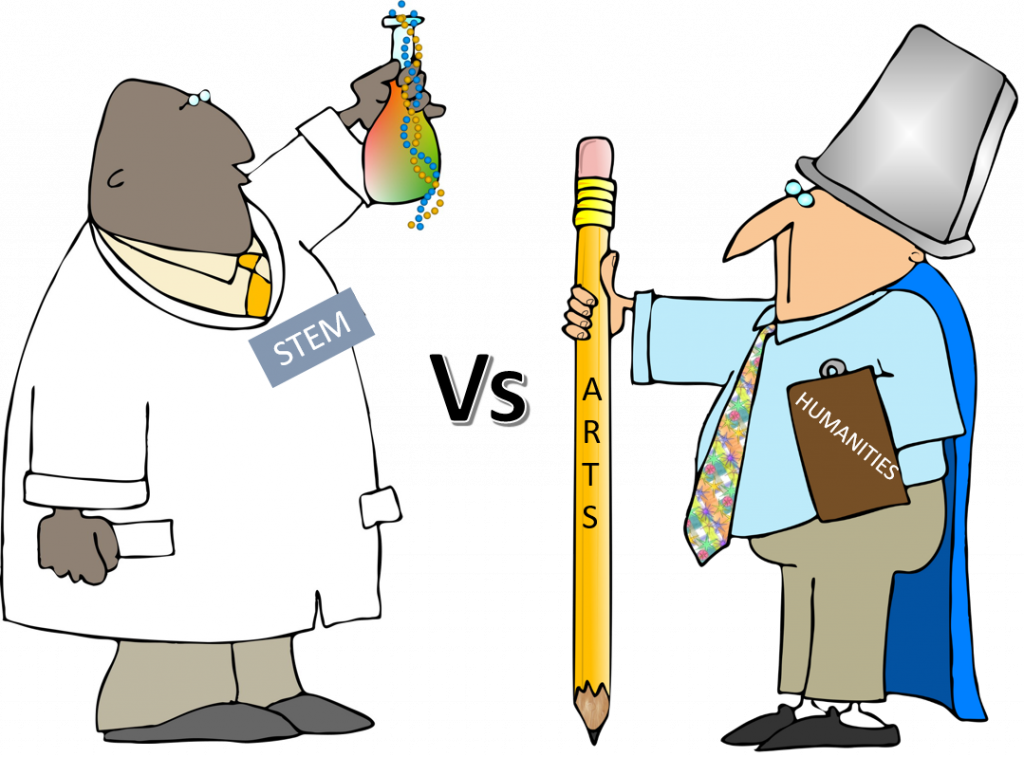

If all the AP classes offered at West High were lined up in front of the school, there would be an entire rainbow worth of classes, each promising rigor and a step towards college credit—but this seems to only hold true for students pursuing careers in science, math, or engineering. For those drawn to the humanities, arts, and social sciences, the options are much more limited. As a result, students whose passions lie outside of STEM often find fewer opportunities to take challenging courses matching their interests.
While scientifically-inclined students can pursue their passions through West High’s extensive AP STEM offerings, the school’s focus on these subjects leaves little room for students who want to deeply explore humanities. On the one hand, with courses like AP Statistics, AP Biology, AP and Chemistry, students pursuing STEM careers are well-supported. On the other hand, students interested in subjects like history, literature, or the arts do not have the same opportunities to challenge themselves academically. Mia Escobar (10) claims, “while I do appreciate the sheer amount of STEM courses at West, it would be a refreshing break to see more courses offered to students who want to pursue … law, language arts, communications, and more.”
Expanding the AP course options beyond STEM is essential to creating an academic environment that will support students working toward careers in humanities and foster well-rounded intellectual development. Students who are passionate about areas outside of STEM deserve the chance to explore these subjects in an academically rigorous way. AP courses in these fields can spark curiosity and provide engagement opportunities in areas students care about. Furthermore, not all successful careers are rooted in STEM. The world needs creative professionals like historians and linguists just as much as it needs engineers and doctors. Offering more non-STEM APs would help prepare students for a wider range of careers, giving them the tools and skills they need to succeed.
AP courses like AP Comparative Politics, AP Seminar, and AP Research could greatly enhance the school’s offerings and allow students to build these humanities-related skills that they need to thrive in society. These courses would give students the chance to explore subjects like global politics, advanced art techniques, or foreign languages at a college level, which will allow students who can relate to these topics to immerse themselves in them. Students like Zoe Swanson (10) expressed, “there must be more opportunities for students who do not want to pursue a career in STEM. For example … I always wanted to take German as a language as I was born there and found it interesting. Unfortunately, I am limited to the fact that West doesn’t offer an AP German course.”
To ensure that every West High student can access academically challenging coursework aligning with their interests, it is important to expand the AP offerings beyond STEM. Adding more non-STEM courses would give students more options to explore the academics and create a more balanced curriculum. When schools offer many AP courses, they help students find the subjects that truly inspire them and push them to grow. West High has the opportunity to become a more inclusive school by offering more diverse AP options, ensuring that all students—whether they’re pursuing careers in humanities, the arts, or STEM—have access to the rigorous academic experiences they need to succeed.