
Immigration and Customs Enforcement (ICE) detentions reached record highs this past January and February, amid reports of agents using deceptive tactics and a rising number of deaths in custody. As communities live in fear, students across the United States have decided to fight back, organizing nationwide school walkouts to protest these policies.
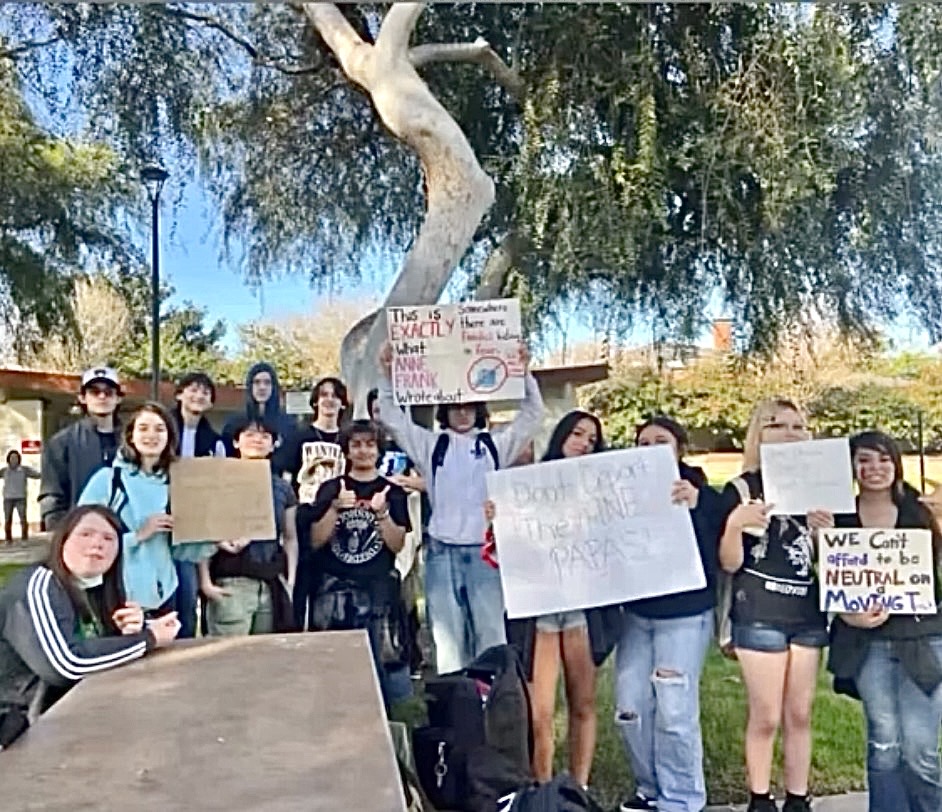
West High joined the movement on January 30, though initial participation was modest. Aiden Diaz (12), who walked out right after attendance, noted a slow start. “The energy was kind of dead,” Diaz remarked. “Even after we walked out, there were only a dozen or so people.” However, the momentum shifted quickly when the group marched to meet a much larger crowd from Redondo Union High School. “The energy picked up rapidly after we met up with Redondo,” Diaz noted. While the school marked participants as truant, no severe discipline was issued. “The security guards didn’t care, but we had to leave,” Diaz recalled.
A grim reality fuels these protests’ urgency, for tens of thousands are currently held in unregulated facilities. For students like Diaz, these numbers are more than just statistics. They represent a safety crisis. “I didn’t want to go out with my family especially because we look very Hispanic,” he shared. Renee Good’s and Alex Pretti’s recent deaths highlight these raids’ lethal stakes. “The killing of Renee Good really affected me,” Diaz added. “It was scary because once white people have to be worried about their lives, everyone else is simply put [at risk].”
For many students, not only is the movement a response to the tragedies that ICE has perpetrated, but is also a reaction to academic hypocrisy. History classes teach the importance of famous historical protests, yet students are often discouraged from practicing what they have learned. “They give us examples to study, yet they don’t want us to learn from them and replicate them,” Diaz argued. He suggests that students must look past strict legality to examine the situation’s morality “In Germany, everything Hitler did was technically legal under Nazi law… People need to look past the law and consider what’s best for their fellow people.”
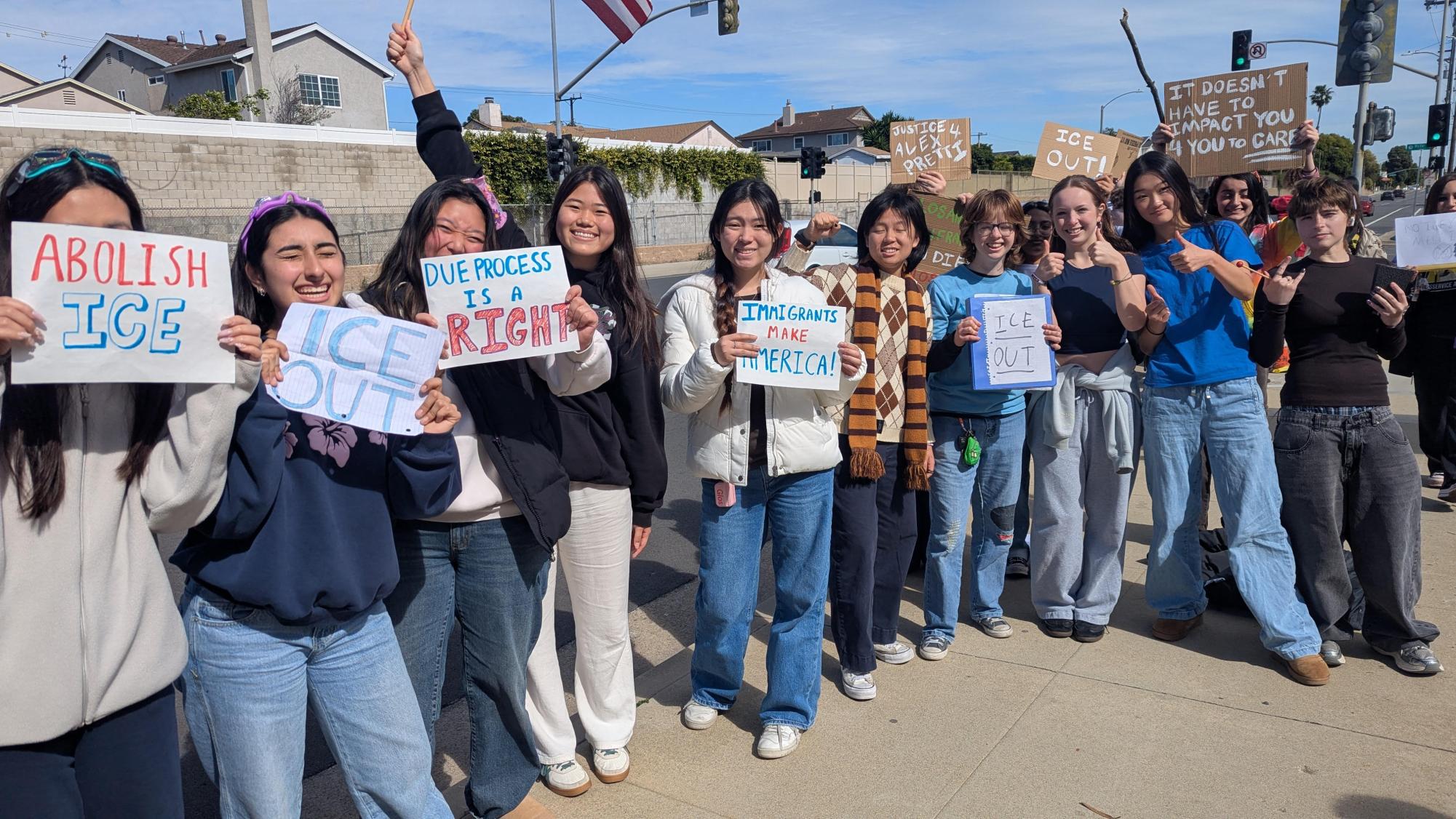
The need for a larger impact complements the urgency to promote morality… That is, to protect all civilians from government encroachment. For this reason, organizers planned a second walkout for February 20. Alex Garcia (12) and Rhiannon Garcia (10) altered their strategy, scheduling the protest for lunchtime, instead of first period, as in the January 30th protest, to prevent unexcused absences. “Hopefully more people will join without having to have an unexcused absence,” R. Garcia stated. The sisters also consulted the administration to ensure that the event remained safe. “We talked to our principal and she was fully on board,” A. Garcia exclaimed. “She was like, ‘I recommend you do this. Please. Please. Please.'”
The organizers for the February 20th event also improved their outreach, using professional flyers and a public Instagram account. “Last time their Instagram was private and they were not keeping up on it,” A. Garcia noted. She spent hours on Canva to ensure the message was clear. They wanted to unite the South Bay region. “I want them to see the South Bay as a united front. This isn’t just a West High School thing… All of us are having our independent protests at the same time.”
- Garcia also pointed out that the protests highlight a growing generational divide. “I definitely think we see things differently than our parents’ generation because the youth is so involved in politics nowadays,” she noted. “Back thirty, forty years ago, kids didn’t need to be involved, but now they do.” A. Garcia echoed this, emphasizing that “progress is made by the youth… Most revolutionaries are under the age of thirty.”
Ultimately, this direct action is about recognizing the human impact behind the headlines. “These people try to live their lives, work, support their family, and our government is actively taking away from them,” A. Garcia remarked. “Stripping away any resemblance of the American dream.”
Despite the weight of the issue, a sense of possibility to ensure that all individuals in the United States can pursue the American dream drives the student protesters. “You will not fight for a better world if you don’t think a better world exists,” A. Garcia asserted. “Developing hope with these student protests is a factor.” R. Garcia also believes that the tide will turn in favor of justice if all participants can be empowered to fight for morality. “I remember any voice is a voice,” she shared. “Everything makes somewhat of an impact, and any impact is important to the cause.”